Varicose Veins and Exercise: Safe Workouts for Encino Residents
Yes, most people with varicose veins can and should exercise. Walking, swimming, and cycling are the safest choices because they activate the calf muscles, which push blood back toward the heart. Avoid heavy straining and long periods of standing still. If you notice pain, swelling, or skin changes, see a vascular specialist about treatment options.
Key Takeaways
Low-impact exercise like walking, swimming, and cycling helps varicose veins by improving calf muscle pumping.
Heavy lifting, long static holds, and high-impact jumping can raise pressure in leg veins.
Thoracic outlet syndrome affects the shoulder and arm, so it needs different exercise limits than leg vein problems.
Exercise supports vein health but does not replace vein treatment when symptoms persist.
See a doctor before continuing training if you develop new swelling, pain, or skin changes.
How Exercise Affects Varicose Veins?
Varicose veins develop when the one-way valves inside leg veins weaken, letting blood pool instead of flowing upward. This causes bulging, aching, heaviness, and sometimes swelling around the ankles.
Your calf muscles act as a second pump. Each time you flex your ankle or take a step, the muscle squeezes the deep veins and moves blood up the leg. Regular movement keeps that pump working and can reduce discomfort. Exercise cannot repair a damaged valve, but it can ease symptoms and slow their progress.
Best Workouts for Varicose Veins
These activities keep blood moving without adding strain:
Walking: Aim for 30 minutes most days. A stroll along Ventura Boulevard or a loop at Sepulveda Basin Recreation Area is an easy way to start.
Swimming and water walking: Water pressure gently supports the veins, and the buoyancy takes stress off the legs. This works well for Encino residents with backyard pools or access to community pools.
Cycling: Stationary or road cycling keeps the calves working with little joint impact.
Yoga and stretching: Poses that raise the legs, such as legs-up-the-wall, help blood drain back toward the heart.
Ankle pumps and calf raises: You can do these at a desk or at home throughout the day.
Exercises to Limit or Modify
Some activities push blood pressure up in the leg veins and can worsen symptoms:
Heavy squats, leg presses, and deadlifts with breath-holding
High-impact jumping or sprinting on hard pavement
Standing in one spot for long stretches, such as during long gym sessions
Hot yoga or workouts in extreme heat, which can widen veins and increase swelling
Summer afternoons in the San Fernando Valley regularly pass 90°F. Early morning or evening workouts are easier on your veins than midday sessions outdoors.
If you do lift weights, use lighter loads, breathe steadily, and rest between sets with your legs elevated when possible.
Thoracic Outlet Syndrome: A Different Problem, Different Rules
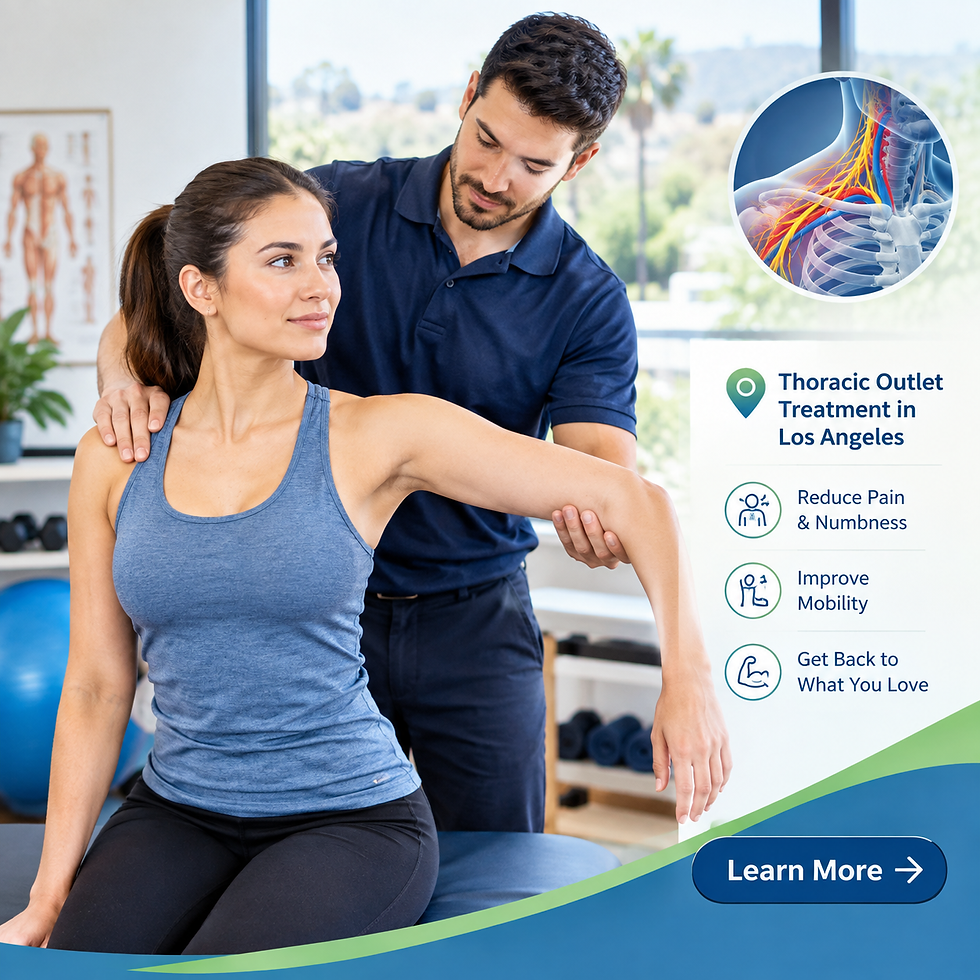
People can easily confuse leg vein conditions with thoracic outlet syndrome, even though they're not similar. Thoracic outlet syndrome is caused by compression of nerves or blood vessels at the region between the collarbone and first rib. Symptoms include numbness and tingling in the arm and hand, shoulder pain, grip weakness, and sometimes arm swelling.
Exercise guidance differs here:
Avoid repetitive overhead movements and heavy shoulder presses.
Skip carrying heavy bags on one shoulder.
Focus on posture, gentle neck and chest stretches, and strengthening the shoulder blades.
Get a proper diagnosis first, since some forms involve the veins or arteries and need medical care.
If you have both leg vein issues and arm symptoms, keep your leg-friendly cardio and ask a physician to guide your upper-body routine.
Supporting Habits That Make a Difference
Exercise works best alongside a few daily habits:
Wear graduated compression stockings if your doctor recommends them.
Elevate your legs above heart level for 15 minutes after workouts.
Keep a healthy weight to reduce pressure on leg veins.
Avoid crossing your legs for long periods.
Take short walking breaks if you sit or stand for work.
When Exercise Is Not Enough?
Lifestyle changes help, but some cases need vein treatment. Consider seeing a specialist if you notice:
Pain that gets worse through the day
Swelling that doesn't go down overnight
Skin darkening, rashes, or hardened skin near the ankle
Open sores or slow-healing wounds
A hot, red, tender vein, which can signal a clot
Modern vein treatment options include compression therapy, sclerotherapy, endovenous ablation, and other minimally invasive procedures. Most are done in an outpatient setting with short recovery times. A duplex ultrasound will show which valves are failing and which approach fits you.
Comments